Options Mall logo Men's Formal Trousers / Juhu
  1. Home
  2. The Campaign
Treatment 01 — The Night Shift

Thecampaign.

A campaign about the most disciplined garment in menswear. Formal trousers. Redefined after dark — where the city's lights reduce everything to line, proportion and intent.

This is not a catalogue. It is a treatment, in the film-making sense: a written vision for how men's formal trousers should look and feel today. Read it in five chapters, from the origins of the trouser to the principles that make it work in a Mumbai office, a client dinner or an evening reception.

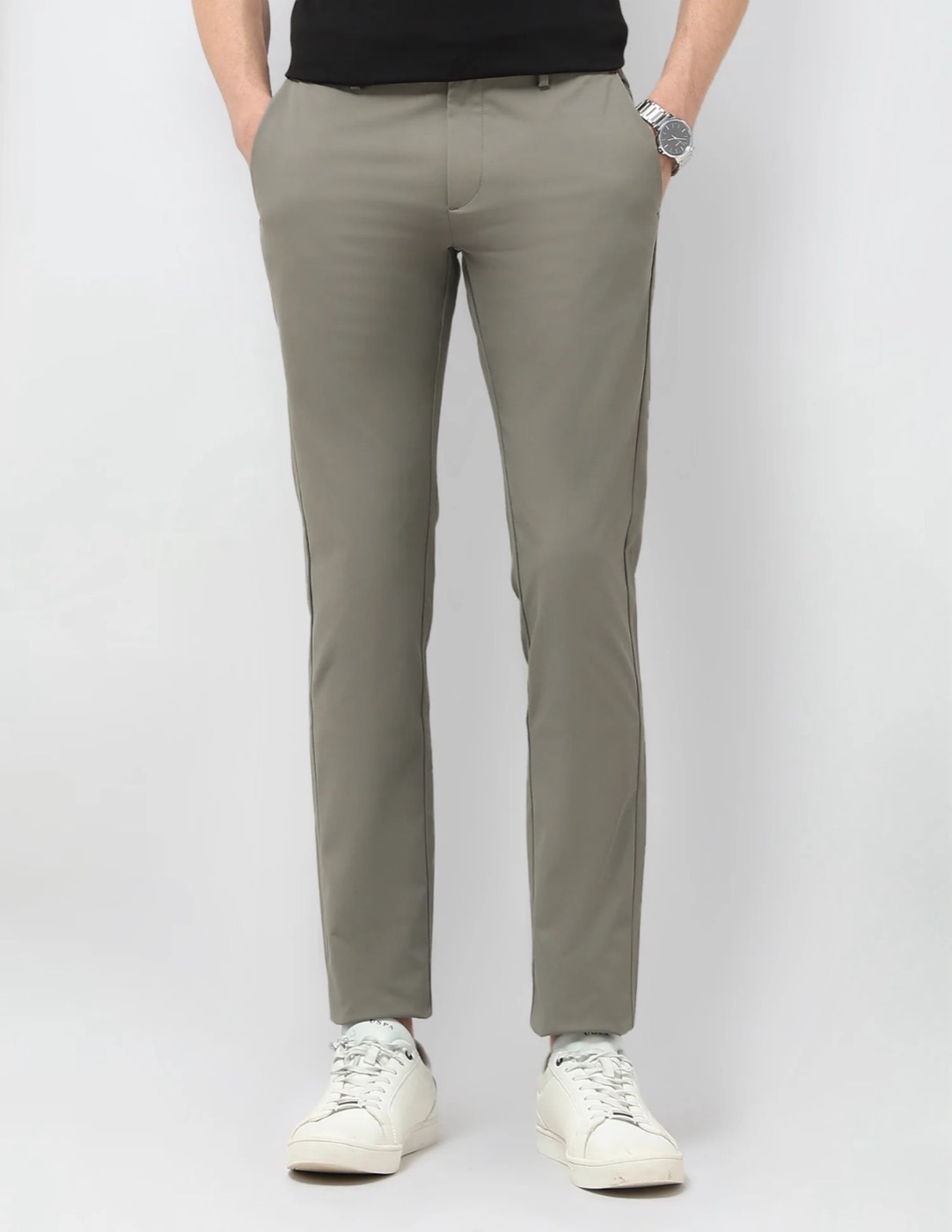
Man in olive tapered trousers with a black T-shirt, wristwatch and white sneakers, hands in pockets
Frame C-01Olive / black / white
Chapter 01 — Evolution

Two centuries
of the line.

The formal trouser is younger than many assume. Its shape has been renegotiated by every generation — a short history explains why today's choices exist.

  1. 1800s

    Breeches give way

    Full-length trousers replace knee breeches in fashionable European dress during the early nineteenth century, helped by the Regency taste for long, clean lines.

  2. Late 1800s

    The lounge suit

    Trousers cut from the same cloth as a short coat form the lounge suit — the direct ancestor of the modern business suit.

  3. c.1900

    The crease arrives

    The pressed front crease becomes fashionable around the turn of the century, alongside turn-ups, and quickly becomes a mark of formality.

  4. 1930s

    High waist, full leg

    Generous, high-waisted, often pleated trousers worn with braces define the era; the zip fly becomes increasingly common.

  5. 1950s–60s

    Narrowing

    Post-war tailoring trims the silhouette. Slimmer, flat-front trousers suit a younger, more streamlined attitude.

  6. 1970s–80s

    Flare, then volume

    Flared legs give way to the full, pleated, power-dressing trousers of the 1980s office.

  7. 1990s–2000s

    Business casual

    Relaxed dress codes separate the trouser from the suit. Formal trousers with a shirt become the everyday professional uniform.

  8. Today

    Choice

    Slim, straight, tapered and pleated coexist. Stretch blends and lighter cloths add comfort; fit is a personal decision, not a rule.

Dates are approximate and describe broad trends in Western tailoring that shaped professional dress worldwide, including in India.

Chapter 02 — Silhouettes

Traditional and modern silhouettes

The traditional silhouette is built for structure. A higher rise sits at the natural waist, often with one or two forward pleats; the leg is generous and falls straight to a hem that breaks on the shoe, sometimes with a turn-up for weight. It was designed to be worn with braces and a jacket, and it moves beautifully because there is cloth to move.

The modern silhouette is built for precision. The rise sits slightly lower, the front is usually flat, the thigh and knee are trimmed and the leg narrows to a smaller opening with little or no break. It shows the shoe, lengthens the leg visually and works with or without a jacket.

Contemporary dressing borrows from both. A modern tapered trouser with a single pleat, or a straight leg with a crisp no-break hem, combines the comfort of tradition with the clean line of today.

Neither silhouette is "correct". The traditional line flatters fuller builds and formal settings; the modern line flatters leaner builds and contemporary offices. Many wardrobes benefit from both.
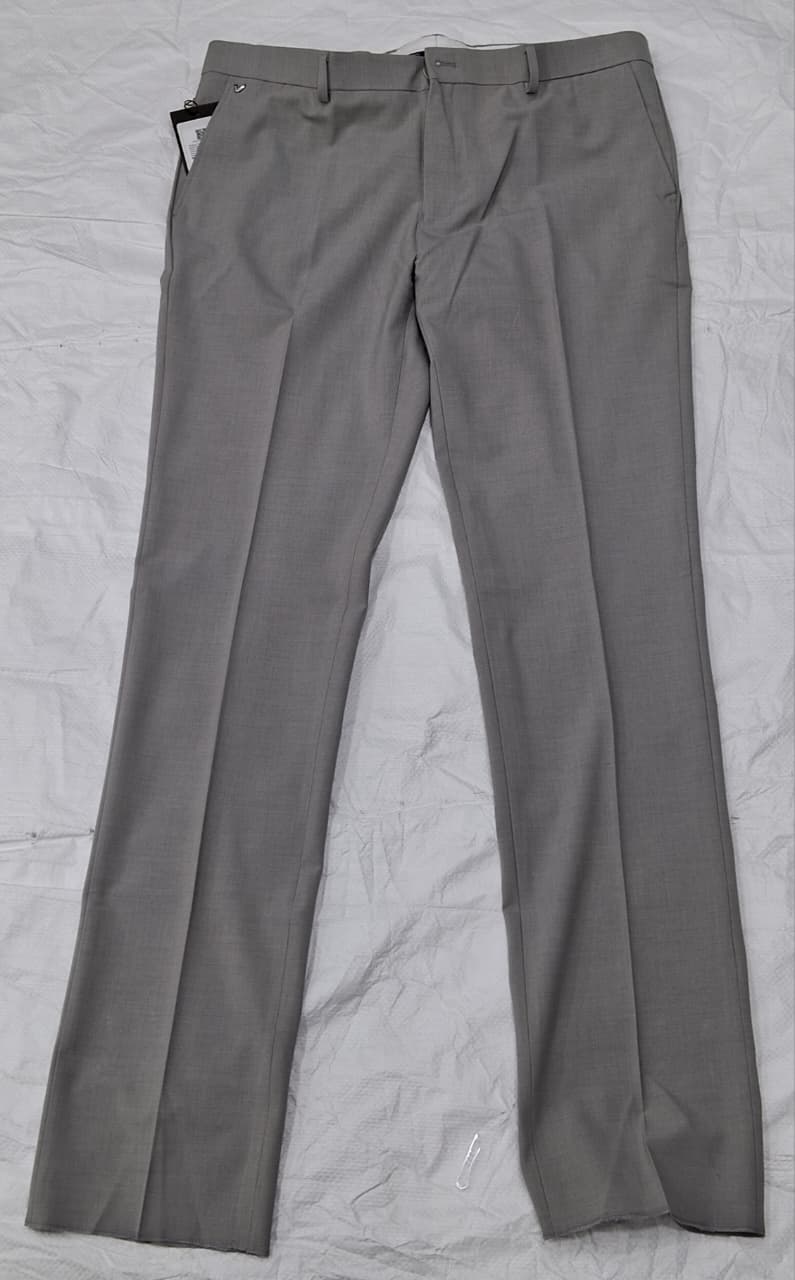
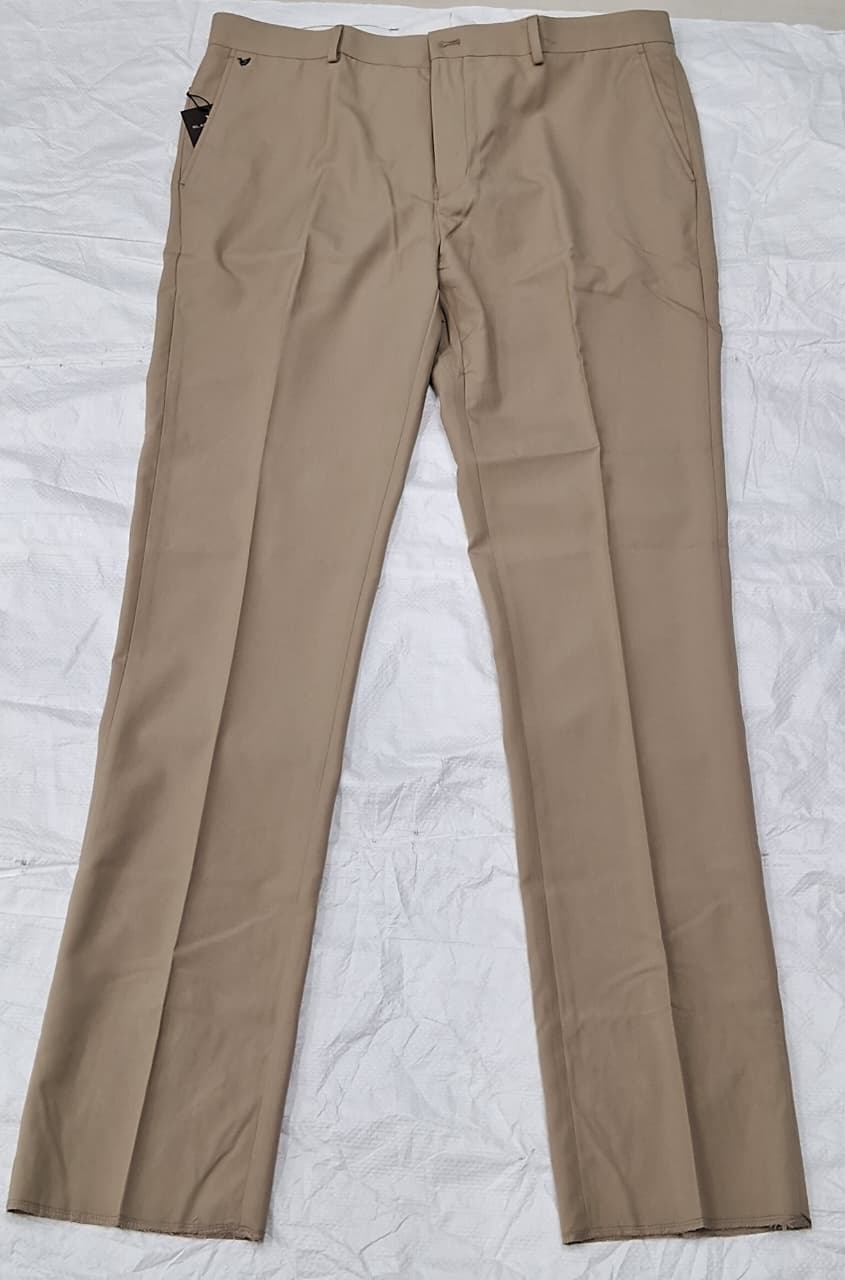
Taupe-grey formal trousers with pressed creases laid flat
C-02APressed, structured
Khaki formal trousers with slant pockets laid flat
C-02BWarm, clean front
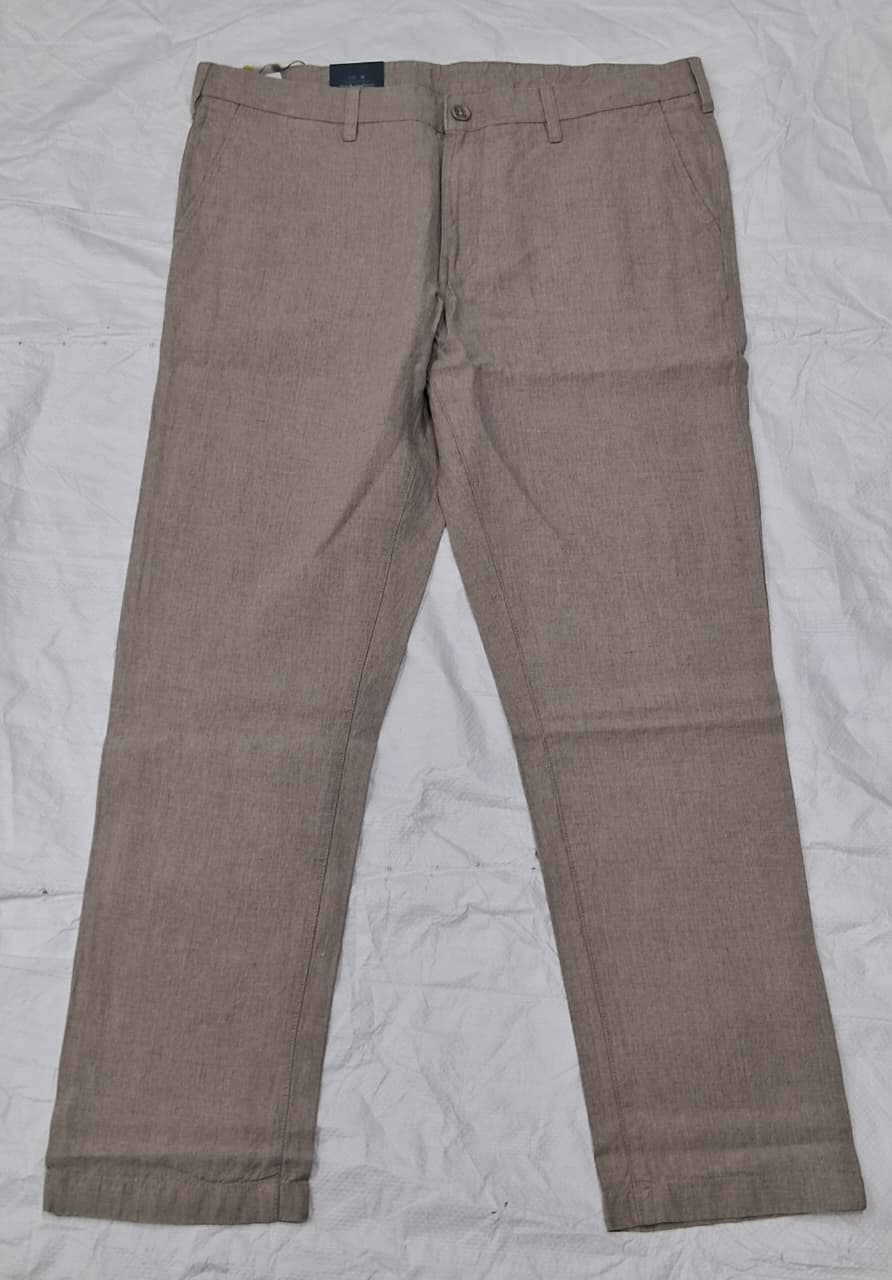
Brown textured trousers with a button closure laid flat
C-02CTextured, relaxed
Chapter 03 — Professional dressing

The trouser
does the
work.

In most professional wardrobes the jacket comes and goes; the trouser stays. It is worn through the commute, the meeting, the lunch and the walk to the car. It is the garment colleagues see most often, and the one that most clearly signals whether a man has dressed deliberately.

In Mumbai's offices the combination is familiar: a formal trouser, a pressed shirt tucked in, a leather belt and leather shoes. Within that uniform, small decisions create distinction — a sharper crease, a better-judged length, a cloth that holds its shape through humidity and air-conditioning alike.

  • Reliability over novelty.

    Charcoal, navy, grey and stone carry most professional weeks.

  • Fit before fashion.

    A well-fitted regular trouser outperforms a poorly fitted slim one every time.

  • Maintenance is presentation.

    A pressed crease and a clean hem say more than any label.

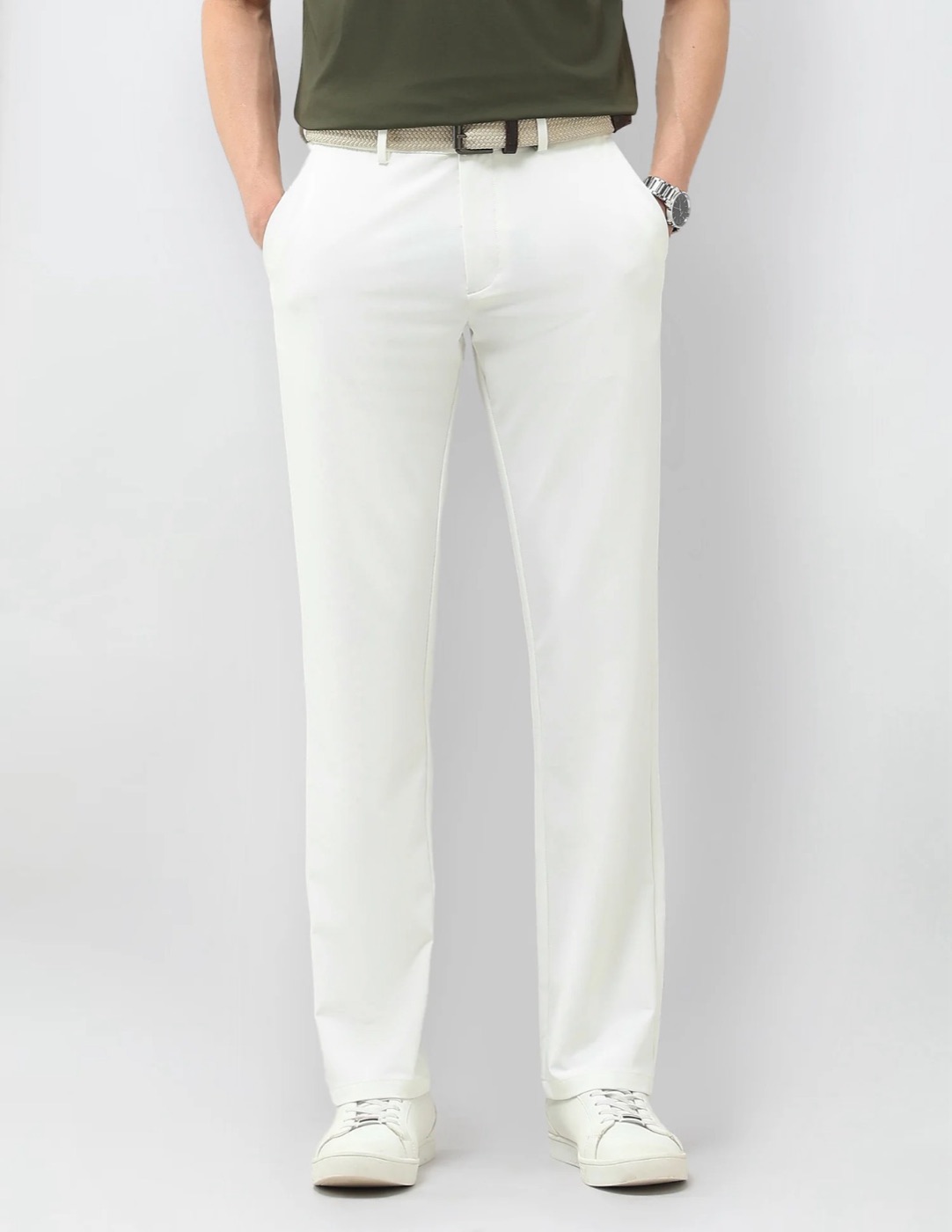
Man in off-white tailored trousers with an olive T-shirt, belt and white sneakers, hands in pockets
Frame C-03Off-white / olive / belted
Chapter 04 — Proportion & confidence

Why proportion reads as confidence

People read clothing as a set of proportions before they register colour or cloth. When the trouser's rise, leg width and length are in balance with a man's height, shoulders and shoes, the eye moves smoothly from head to floor. That ease reads as composure.

When proportions fight each other — a low rise with a long untucked shirt, a narrow hem over a heavy shoe, excess cloth pooling at the ankle — the eye stops at the problem. The wearer may feel it too: tugging at a waistband, adjusting a hem, sitting carefully.

Getting proportion right is less about rules than about removing distractions. The trouser should disappear into a clean line, leaving attention on the person wearing it.

Practical test: stand in front of a full-length mirror in your usual shoes. If your eye goes straight to the waist, knee or hem, that point needs attention.

Chapter 05 — Principles

Seven
principles.

Contemporary styling principles for men's formal trousers — simple to remember, useful every morning.

  1. Start with the trouser

    Choose it first. Its colour and formality decide everything else.

  2. Contrast the jacket

    Separates look intentional when the jacket and trouser clearly differ in tone.

  3. Match leathers

    Belt and shoes in the same colour family and finish.

  4. Respect the hem

    Choose a break that suits the shoe and keep the length consistent across pairs.

  5. Mind the rise

    Tucked shirts sit best with a mid to higher rise; avoid exposing the shirt tail when seated.

  6. Dress for the climate

    Breathable cloth in lighter weights earns its place in Mumbai's humidity.

  7. Keep the crease alive

    Hang trousers by the hem or folded on the crease; press when the line softens.

Next scene — 02Trousers