- Home
- Fits
Ninepointsof fit.
How a formal trouser fits is decided at nine points, from the waistband to the hem. Scroll through the lab: the diagram highlights each point as you read about it.
There is no universally "best" fit. The right trouser balances your height, build, posture and footwear — and how you spend your day. Use this guide to understand the choices, then try them on.
Fig. F-03 / Front01 Waist
-
Point 01 / Waist fit
The waist should hold itself.
A well-fitted formal trouser stays level at the waist without a belt. The belt is there to finish the look, not to hold the trouser up. When fastened, you should be able to slide a flat hand — not a fist — inside the waistband.
- Too tight: pocket bags flare open and the fly pulls into horizontal creases.
- Too loose: the waist gapes at the back or the trouser drops below your intended rise.
- Waist issues are among the easiest alterations; most formal trousers carry seam allowance at the centre back.
-
Point 02 / Front & back rise
Rise decides where the trouser lives.
Rise is the distance from the crotch seam to the top of the waistband, measured front and back. A low rise sits on the hips; a mid rise sits close to the natural waist; a high rise sits at or above it. The back rise is usually longer than the front so the trouser stays covered when you sit.
- A mid to high rise keeps a tucked shirt in place and lengthens the leg line.
- A rise that is too short pulls at the crotch; too long, and cloth collects below.
- Pleated trousers usually work best with a slightly higher rise.
-
Point 03 / Seat & hip
Smooth over the seat.
From behind, the cloth should drape cleanly over the seat. Horizontal pull lines mean it is too tight; vertical folds or a "pouch" of fabric under the seat mean it is too loose.
- Check while standing and while sitting — a seat that is perfect standing may strain seated.
- Slant front pockets that lie flat are a good sign the hip measurement is right.
-
Point 04 / Thigh room
Room to move.
The thigh should allow you to sit, climb stairs and cross your legs without the fabric pressing into the leg. Slim cuts reduce thigh room deliberately; regular, tapered and pleated cuts add it.
- If the thigh is tight but the waist fits, try a tapered or pleated cut rather than a larger size.
- Fabric with a small stretch content adds comfort in slimmer cuts.
-
Point 05 / Knee width
The hinge of the silhouette.
Knee width is a quiet but decisive measurement. Compared with the hem opening, it determines whether the lower leg reads as straight, tapered or flared. A knee that is too narrow causes the cloth to bunch above it when you sit.
- Knee wider than hem: a taper.
- Knee and hem similar: a straight leg.
- Knee narrower than hem: a flare or bootcut — rarely used in formal trousers today.
-
Point 06 / Leg shape
The line the eye reads first.
The overall leg shape — slim, straight, regular or tapered — is the sum of seat, thigh, knee and hem. It should be in proportion with your shoulders: broader frames often look most balanced in straight or regular legs; leaner frames carry slim and tapered legs easily.
- The front crease should fall straight down the centre of the leg, to the middle of the shoe.
- A crease that twists inward or outward signals a fit or pressing problem.
-
Point 07 / Trouser length
Length is a style decision.
Trouser length is measured along the inseam or the outseam. The correct length depends on the break you want, the shoes you wear and the leg shape: narrow legs are typically worn shorter, wider legs a little longer.
- Always check length in the shoes you will actually wear.
- Shortening is a routine alteration; lengthening depends on how much fabric is turned up inside the hem.
-
Point 08 / Trouser break
Where cloth meets shoe.
The break is the fold that forms when the hem rests on the top of the shoe. No break is crisp and contemporary; a slight (quarter) break is the most versatile; a medium (half) break is classic; a full break is traditional and works best with wider legs.
- No break suits slim and tapered trousers with loafers.
- A slight break suits nearly every formal trouser and shoe.
-
Point 09 / Hem opening
Scale the hem to the shoe.
The hem opening should be in proportion with your footwear. Too narrow over a heavy brogue looks pinched; too wide over a slim loafer looks unfinished. As a guide, the hem should cover roughly half to most of the shoe's upper when standing.
- Plain hems are standard for formal trousers; turn-ups add weight and a traditional touch.
- A slight backward slant on the hem lets the back sit a little lower than the front for a cleaner break.
Three legs,
three effects.
The same light neutral palette, three different leg lines. Notice how each changes where the eye stops and how the shoe is framed.
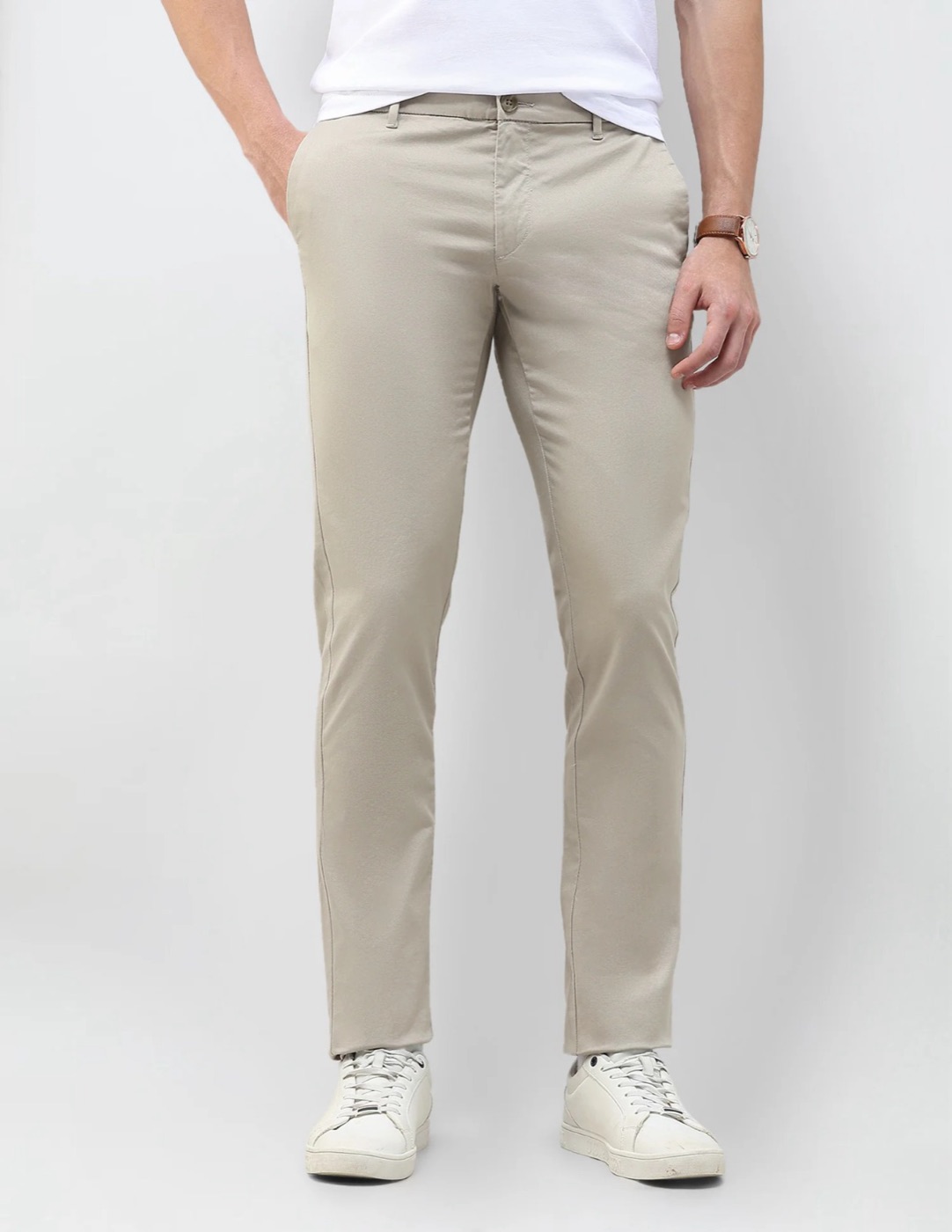
Slim & narrow
Close through the thigh, narrowing to a small hem with almost no break. Lean and modern; it shows the full shoe and lengthens the leg.
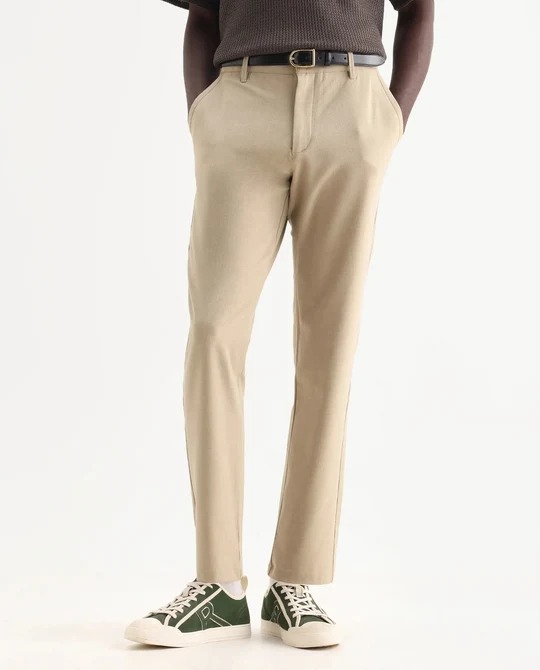
Straight & cropped
A straighter, roomier leg cut to a cropped length above the ankle. Relaxed and current, best kept for smart-casual settings.
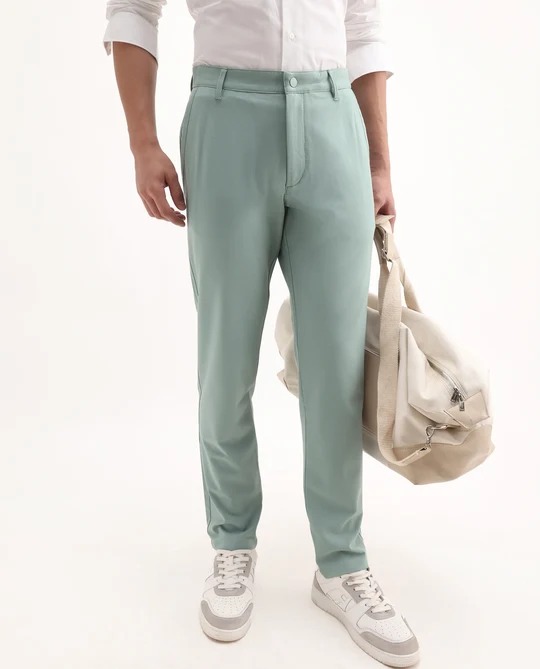
Tapered & clean
Fuller at the top with a steady taper to the ankle. Comfortable through the thigh and sharp at the hem — a modern all-rounder.
Read the
hem line.
Five trousers laid flat. The citron line marks the hem: compare how each leg narrows — or doesn't — on its way there.
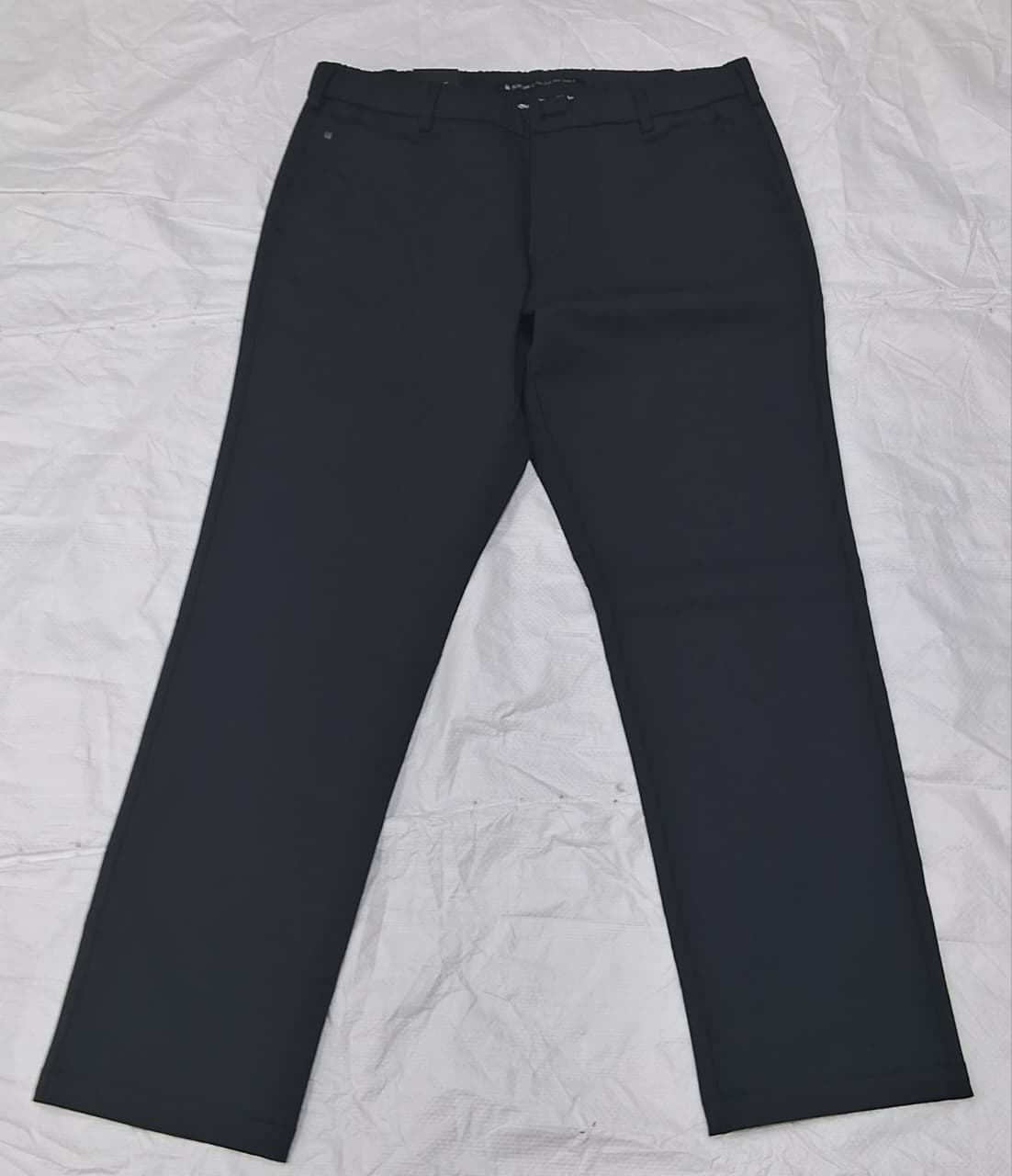
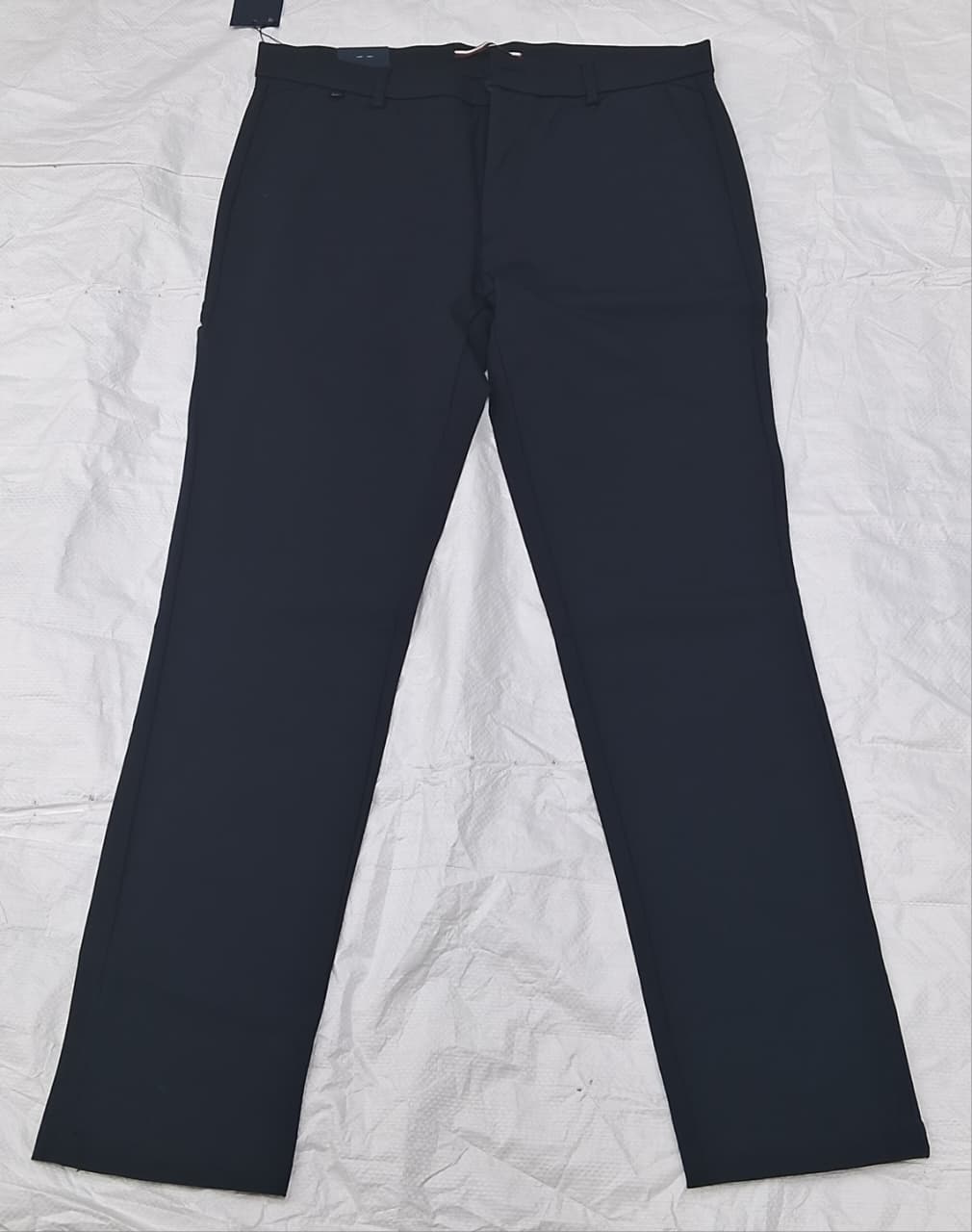
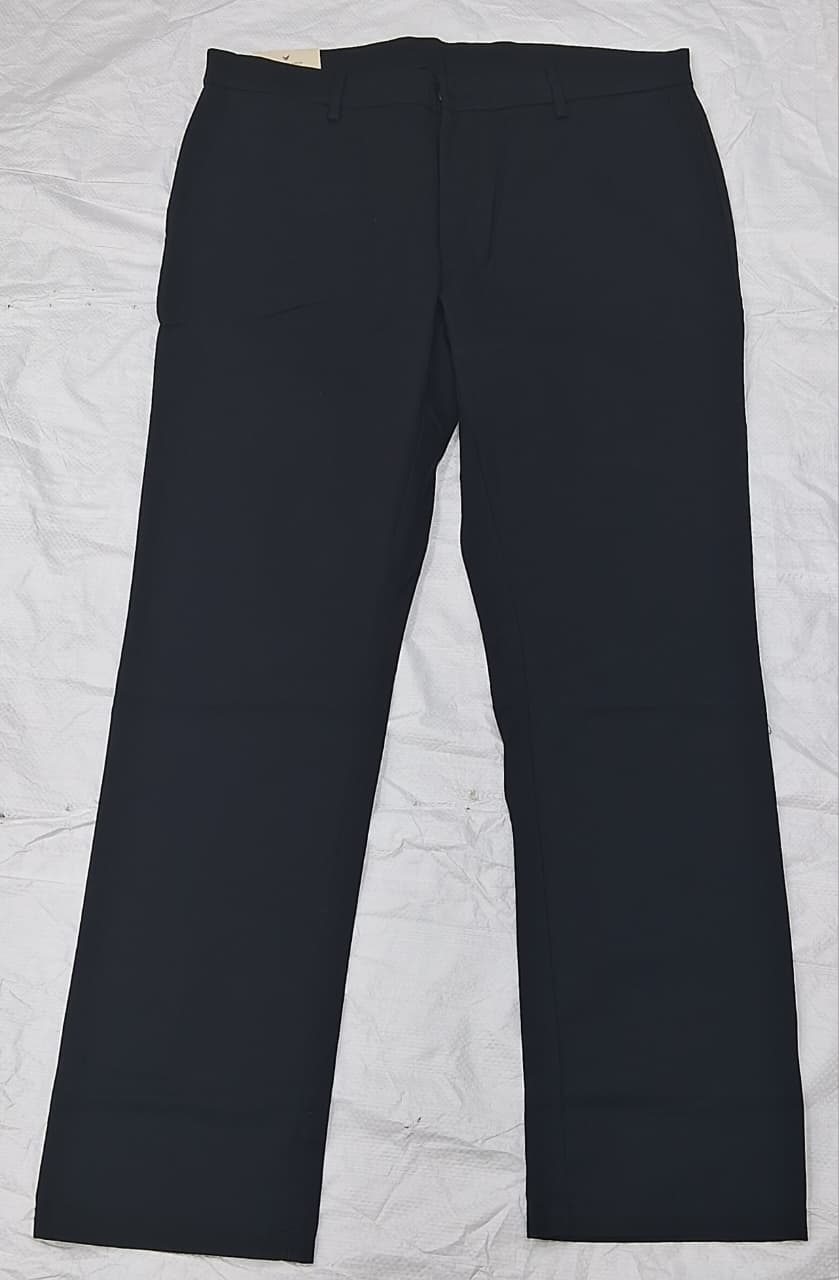
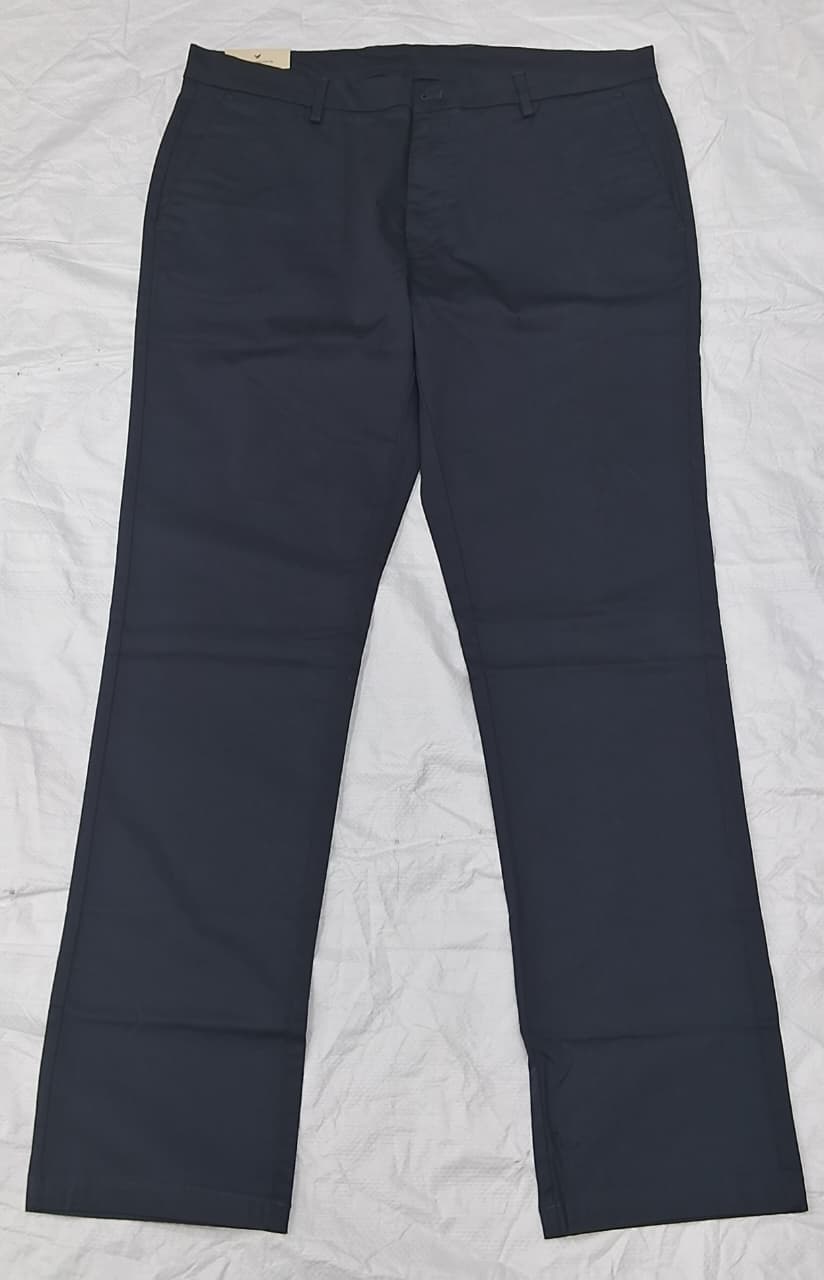
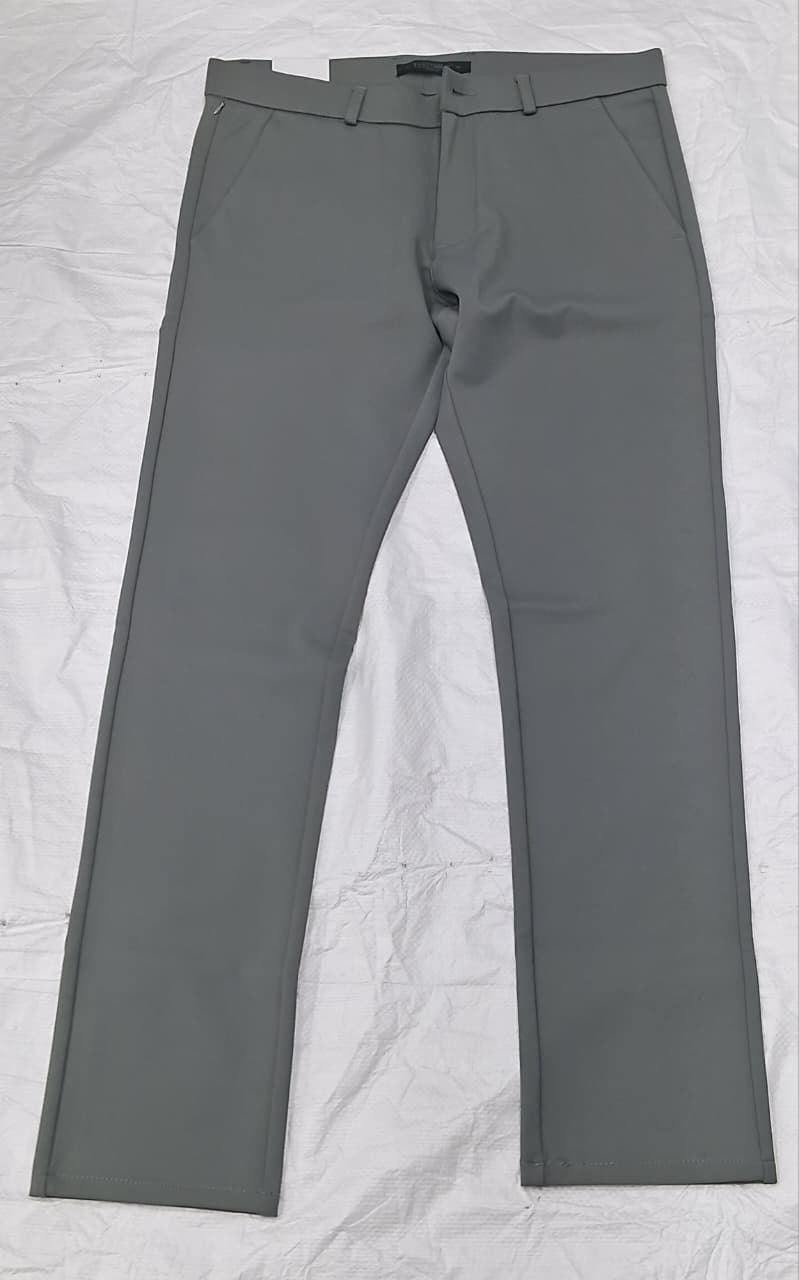
Flat-lay photographs show proportions only approximately; the shape of a trouser is best judged when worn.
Four ways to finish a trouser
No break
The hem just touches the top of the shoe. Crisp and modern; best with slim and tapered legs and loafers.
Slight break
A single soft fold. The most versatile choice for formal trousers and the safest default.
Medium break
A clear fold at the front. Classic and comfortable; suits straight and regular legs.
Full break
A deep fold resting well onto the shoe. Traditional; needs a wider leg and works with heavier shoes.