Cloth decides how a formal trouser drapes, breathes, creases and ages. This publication sets out the main fabric families, what each does well, and how to care for them.
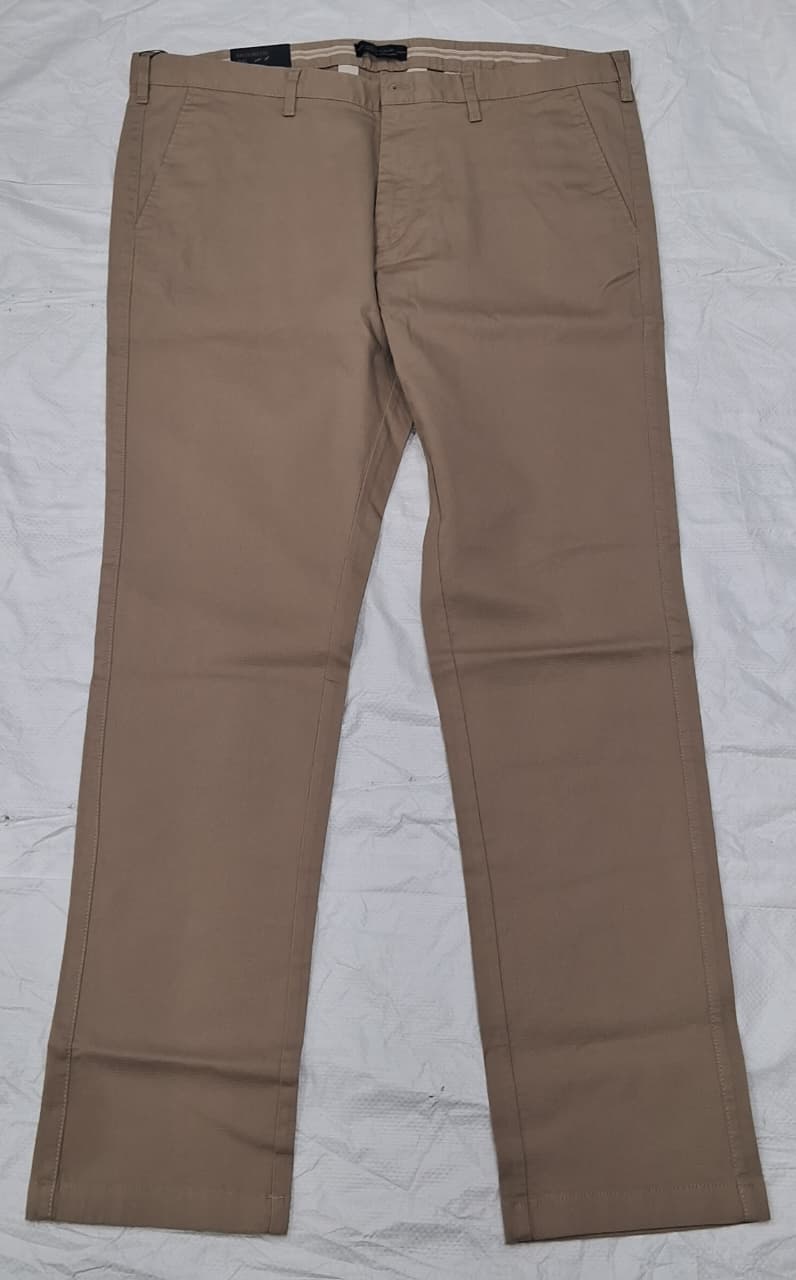
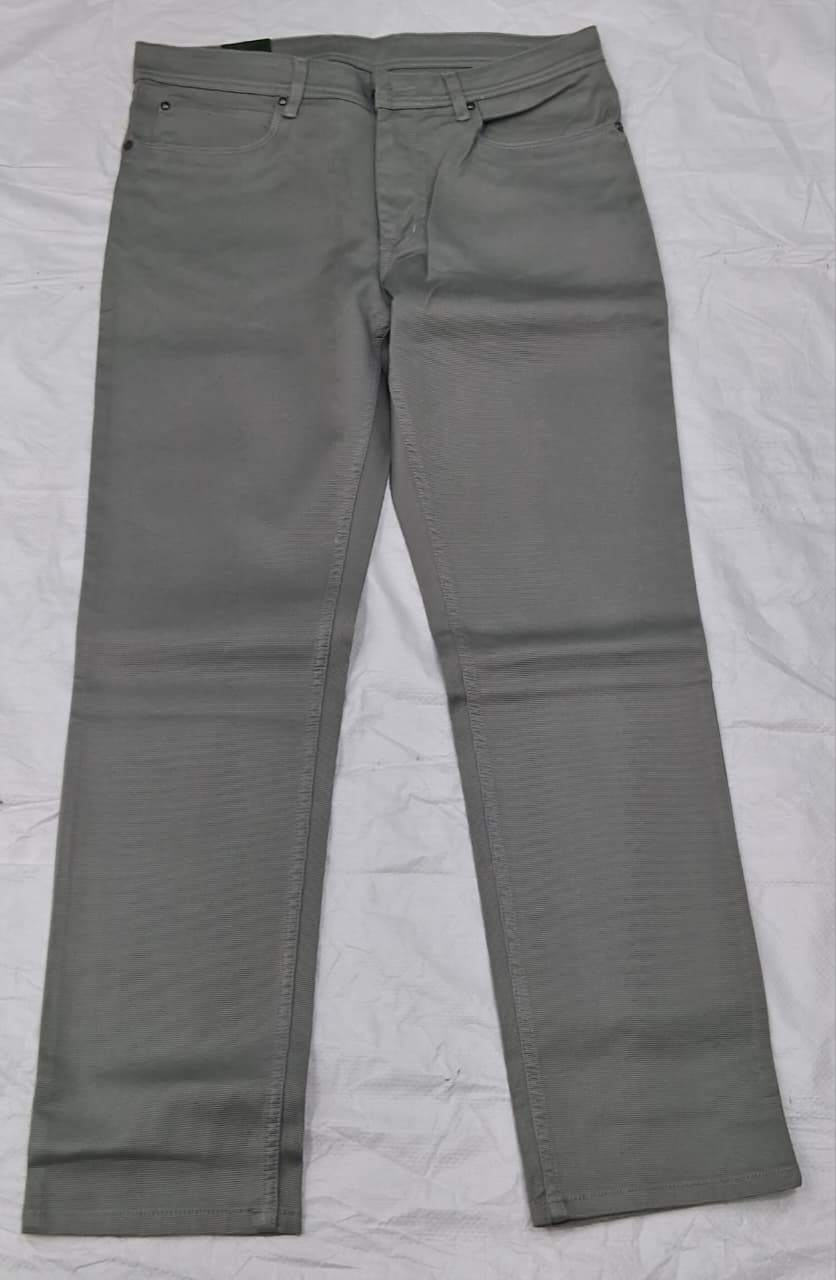
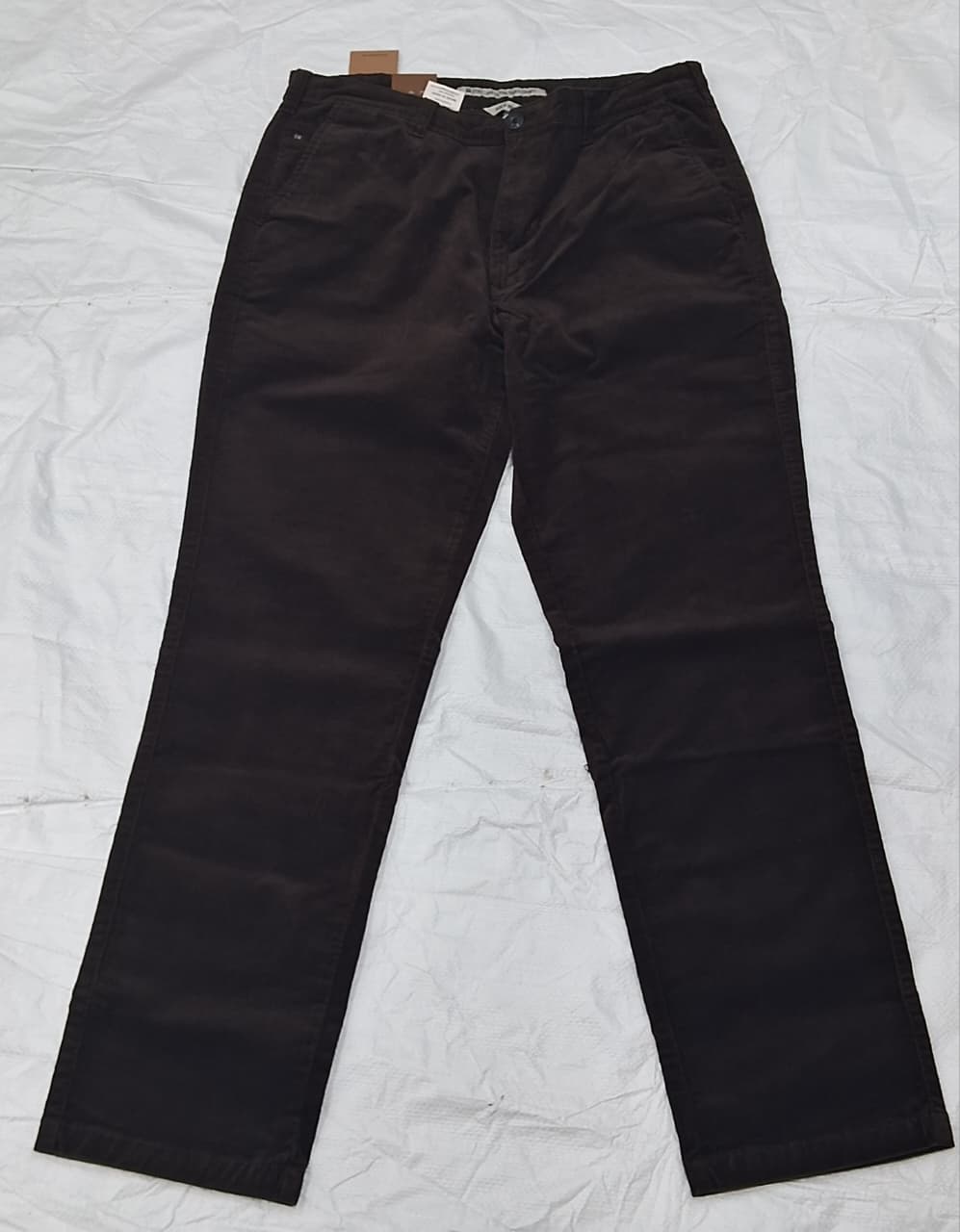
Characteristics described here are general tendencies of each fabric family. Specimen photographs are visual references of surface and drape; they do not state the composition of any Options Mall product — check each garment's label.
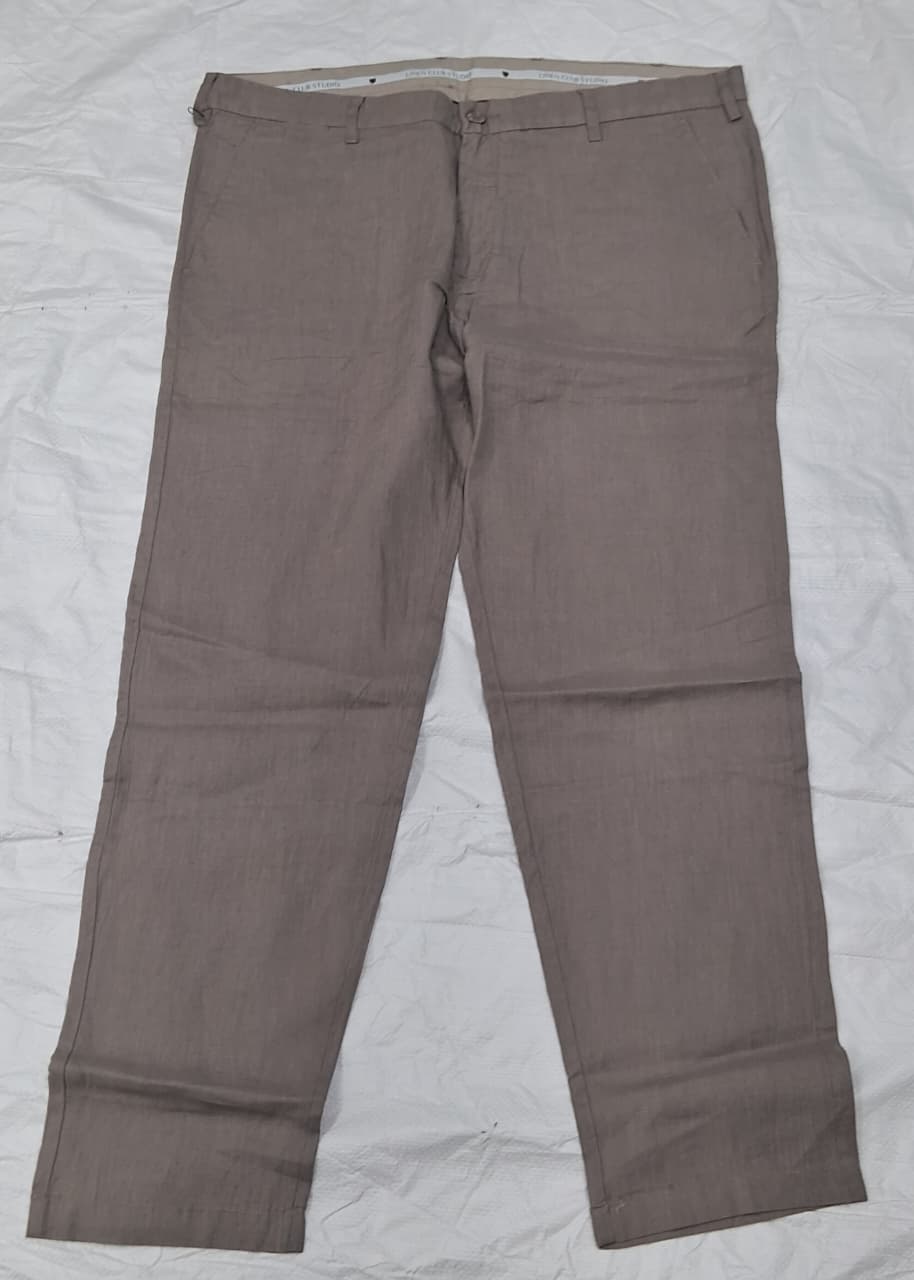
Plate 01Fine textured surface
×4 detail
Family 01 — Natural fibre
Wool
Wool is the traditional cloth of formal trousers for good reason. Its fibres are naturally elastic, so creases fall out and pressed lines hold. Finely spun worsted wools have a smooth, slightly lustrous surface and drape fluidly from hip to hem.
Lightweight "tropical" wools are open-woven to breathe, making wool more versatile in warm climates than many expect — and especially comfortable in air-conditioned offices. Wool generally prefers gentle care: airing, brushing and professional cleaning when needed.
Breathability4 of 5Crease recovery4 of 5Drape5 of 5Stretch2 of 5
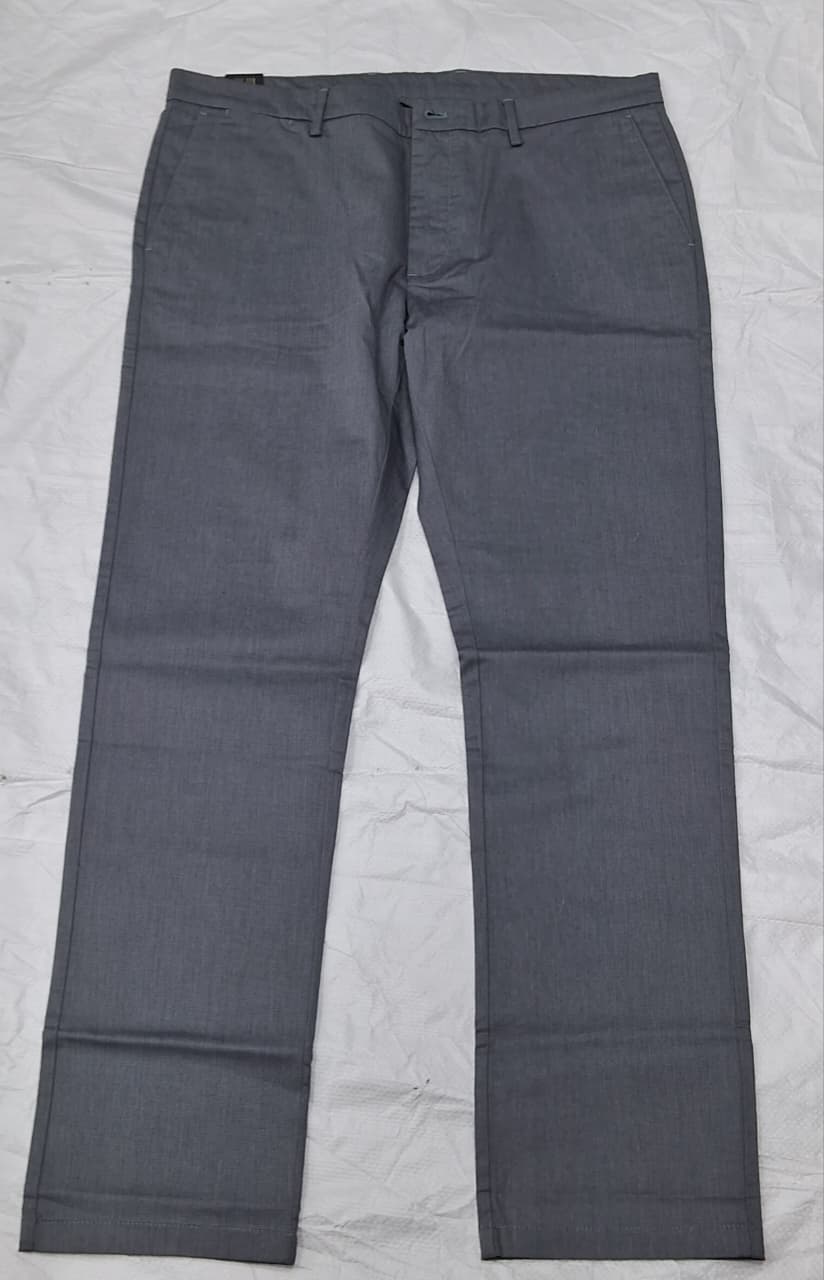
Plate 02Mottled, melange surface
×4 detail
Family 02 — Blend
Wool blends
Blending wool with synthetic fibres such as polyester, or with others such as viscose, aims to keep much of wool's handle and drape while adding durability, shape retention and easier maintenance.
The character of a blend depends on its proportions: more wool generally means a softer hand and better breathability; more synthetic generally means stronger crease resistance and lower upkeep. Blends are a practical choice for daily office wear and travel.
Breathability3 of 5Crease recovery4 of 5Drape4 of 5Stretch2 of 5
Plate 03Matte, soft surface
×4 detail
Family 03 — Natural fibre
Cotton
Cotton is soft, matte and highly breathable, which makes it a natural choice for warm, humid days. Woven tightly — as twill or gabardine, for example — it becomes crisp and structured enough for smart offices.
Its weakness is creasing: pure cotton wrinkles with wear and loses its pressed line more quickly than wool or blends. It is generally easy to wash; follow the label to avoid shrinkage and fading.
Breathability5 of 5Crease recovery2 of 5Drape2 of 5Stretch1 of 5
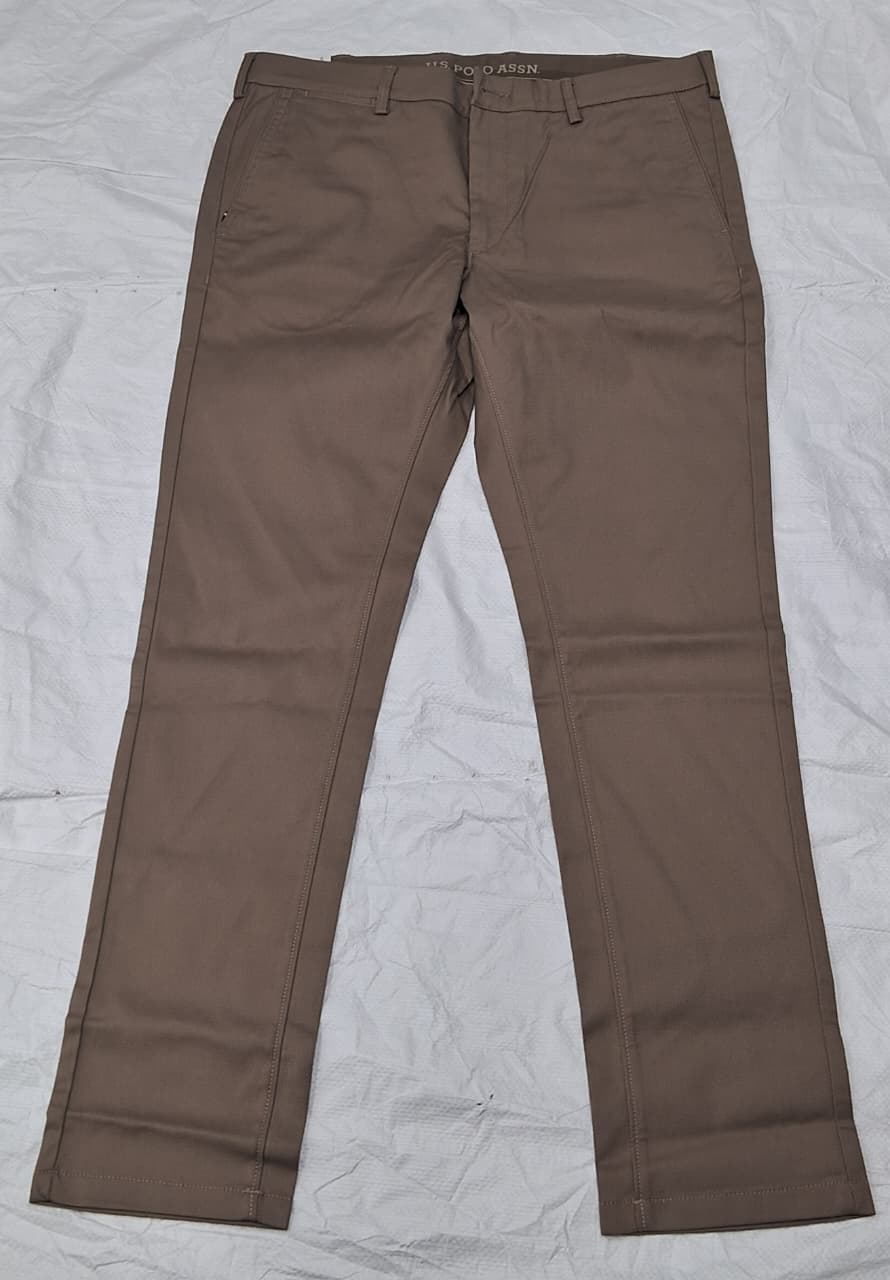
Plate 04Smooth twill-like surface
×4 detail
Family 04 — Blend
Cotton blends
Cotton blended with polyester, viscose or a small amount of elastane keeps much of cotton's comfort while improving shape recovery, smoothness and crease resistance.
The result is an everyday professional fabric: comfortable in heat, neater through the day than pure cotton, and usually straightforward to care for. Many contemporary office trousers fall into this family.
Breathability4 of 5Crease recovery3 of 5Drape3 of 5Stretch2 of 5
Plate 05Even, smooth surface
×4 detail
Family 05 — Blend
Polyester blends
Polyester brings strength, wrinkle resistance and colour stability. Blended with viscose or wool, it produces smooth fabrics that hold a sharp crease and look neat after a long commute.
The trade-off is breathability: higher polyester content can feel warmer in humid weather. Lighter weaves and blends with a higher natural-fibre share help. Polyester blends are usually easy to wash and quick to dry.
Breathability2 of 5Crease recovery5 of 5Drape3 of 5Stretch2 of 5
Plate 06Fine dobby texture
×4 detail
Family 06 — Performance
Stretch fabrics
A small proportion of elastane (spandex) woven into cotton, wool or synthetic cloth gives a trouser "mechanical" stretch — it moves with the body and recovers its shape.
Stretch is especially valuable in slim and tapered cuts, where there is less ease, and for active days of commuting, travel and long meetings. Avoid very high heat when washing or pressing, which can weaken elastane over time.
Breathability3 of 5Crease recovery3 of 5Drape3 of 5Stretch5 of 5
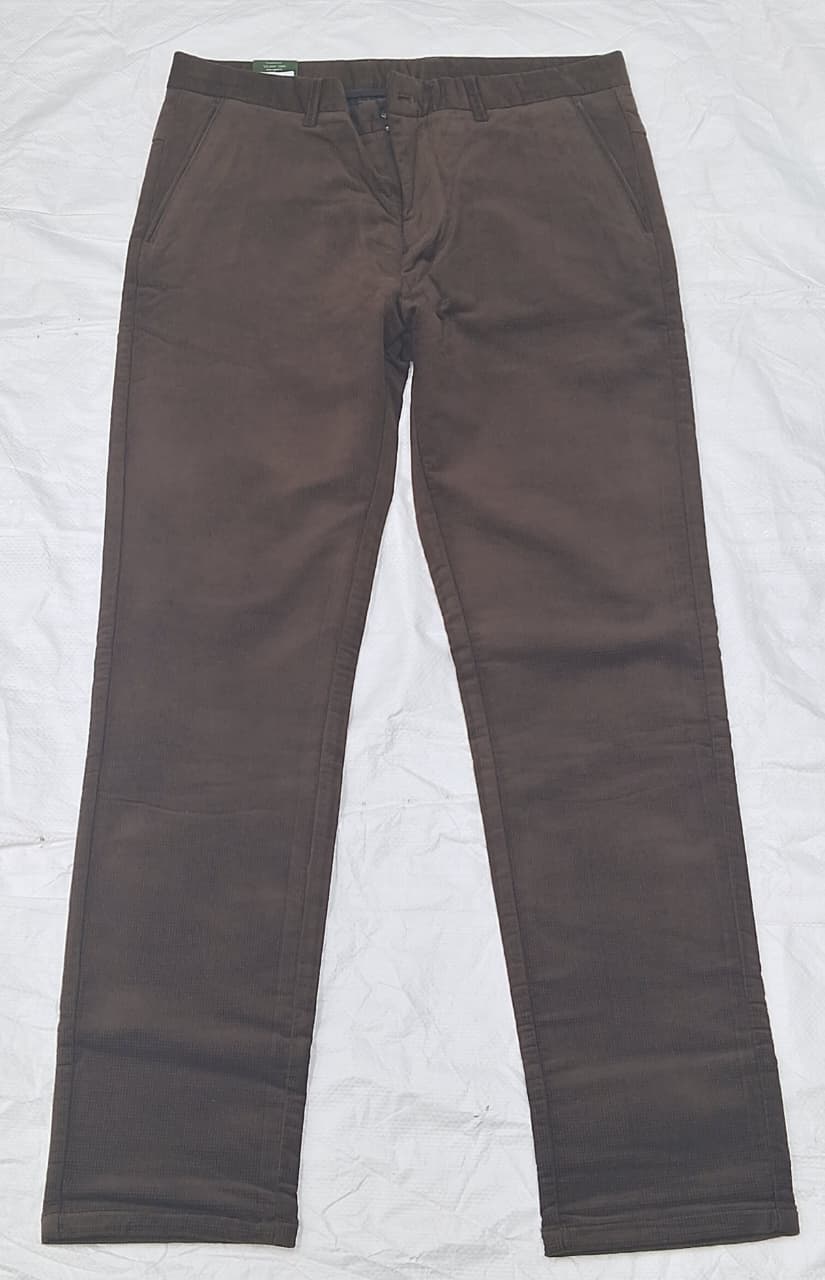
Plate 07Fine ribbed (wale) surface
×4 detail
Family 07 — Surface
Textured fabrics
Texture comes from the weave or finish rather than the fibre: twill's diagonal lines, herringbone's zigzag, micro-checks, slubbed linen-look yarns and fine ribbed (wale) surfaces like needlecord.
Textured cloths add visual depth and are forgiving of minor creasing. They work particularly well as separates — a textured trouser with a plain blazer, or a plain trouser with a textured jacket — and generally read slightly less formal than smooth cloths.
Visual depth5 of 5Crease disguise4 of 5Formality3 of 5Versatility4 of 5
Dot scales show general tendencies relative to the other families on this page — they are a reading aid, not laboratory measurements.
Family 08 — Season
Seasonal weights.
Fabric weight is usually expressed in grams per square metre (GSM) or ounces per yard. Lighter cloths breathe; heavier cloths drape and hold their line.
LightHot & humid days
Airy, cooler and quick to dry. Ideal for Mumbai's long warm season and monsoon. Can crease more and drape less, so fit and pressing matter.
MidYear-round
The most versatile range for formal trousers: enough body to hold a crease and hang cleanly, light enough for air-conditioned offices and travel.
HeavierCool & formal
Richer drape and a more substantial hand. Best for cooler climates, winter travel and very formal occasions.
Glossary
Six words that describe every cloth
Tx
Texture
The visible and tactile surface: smooth, matte, ribbed, slubbed, brushed.
Wt
Weight
How heavy the cloth is per area. It governs warmth, drape and durability.
Dr
Drape
How the fabric falls under its own weight — fluid, crisp or stiff.
Sr
Structure
How well the cloth holds a shape and a pressed crease through the day.
Cf
Comfort
Softness, breathability and freedom of movement, together.
Ca
Care
The cleaning, drying and pressing a fabric needs — always on the label.